
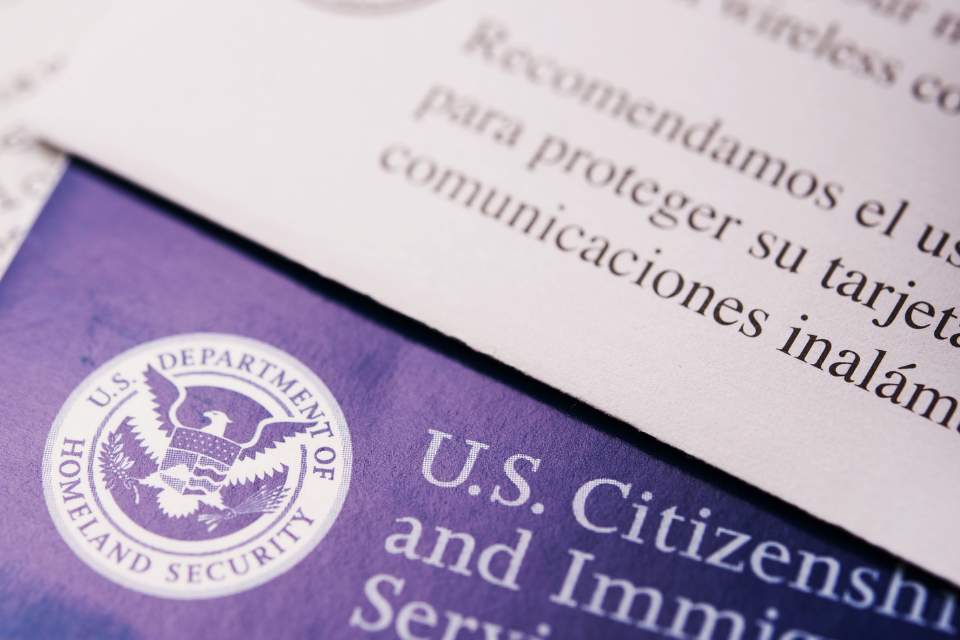
Immigration law keeps changing, and we want to make sure you stay informed. In this issue, we share two important updates you should know about domestic travel and the public charge rule.
DHS Rescinds the 2022 Public Charge Rule
The Department of Homeland Security has issued a final rule that removes the public charge regulation that has been in place since 2022. This change will affect how USCIS reviews green card applications going forward.
What Is Changing
Under the 2022 rule, USCIS could only consider a narrow list of public benefits, mainly cash assistance and long-term institutional care, when deciding whether an applicant was likely to become a public charge. Under the new rule, USCIS officers will have broader discretion to review all relevant facts about an applicant’s circumstances on a case-by-case basis.
Effective date: The new rule takes effect on September 18, 2026. USCIS will also release a revised Form I-485 (Application to Register Permanent Residence or Adjust Status). Older versions of Form I-485 filed on or after that date will not be accepted.
What This Means for You
If you plan to apply for a green card, this change may affect how your application is reviewed. This is especially true if you or a family member have received public benefits in the past. A well-prepared application with strong documentation is more important than ever.
What you can do now:
- If you are ready to file for a green card, consider filing before September 18, 2026, to be reviewed under the current rule.
- Gather documentation about your income, assets, education, and work history.
- Schedule a consultation to understand how this change may affect your specific case.
Reports of Increased Detention During Domestic Air Travel
AILA members (American Immigration Lawyers Association) have reported an increase in individuals being stopped or detained by the Department of Homeland Security (DHS) at U.S. airports while traveling between states. These reports come from states including California, Colorado, Florida, Illinois, Kansas, Michigan, New Jersey, Texas, and Virginia.
Some of the people affected did not have a criminal record. Some had valid work permits or advance parole documents. Others had a timely filed application for a green card or asylum, which may allow a person to stay in the United States while USCIS reviews the case.
What This Means
There is no new published DHS or USCIS policy stating that people with a pending application cannot travel within the United States. However, enforcement practices appear to be changing.
If your immigration status has expired, or if your ability to remain in the United States depends on a pending USCIS filing, please reach out to our office to schedule a consultation and discuss your situation before you book domestic travel.
We Are Here to Help
Immigration rules can change quickly, and small mistakes can lead to delays or rejections. At the Law Office of Christine Contreras, we are here to guide you through the process with clarity and care.
Schedule a consultation with the Law Office of Christine Contreras today. We will review your case, explain your options, and help you take the right steps toward your future.